In this powerful conversation, Molly Rowan Leach is joined by Lindsey Frischer (Southwest Community Justice Coalition), Cristina Cabeza (Colorado Coalition for Restorative Justice Practices), and Ames Stenson (Restorative Rainbow Alliance) & Englewood Municipal Court RJ Program) for a deep dive into coalition-building, relational accountability, and the living practice of restorative justice across Colorado.
This is not a theoretical discussion.
It is a grounded, hard-earned exploration of what it takes to build restorative infrastructure — inside systems, beyond systems, and sometimes in partnership with them.
Together, they unpack:
What “community-held restorative justice” actually looks like in practice
Building coalitions across municipalities, courts, and grassroots spaces
Asset mapping and capacity-building as alternatives to over-reliance on punishment
Moving “at the speed of trust”
Why restorative justice must actively dismantle harm — not replicate it
The creation and impact of Colorado’s updated RJ Practitioner Guidelines
The groundbreaking work of the Restorative Rainbow Alliance and LGBTQ+ inclusion in restorative practice
As Cristina reminds us, community is not idyllic or abstract:
“Community holds all of it.”
From statewide policy work to small-town circle practice, this episode reveals how justice becomes sustainable when it is relational, intentional, and collectively stewarded.
You’ll hear how community agreements, harm processes, and values-based organizing create real alternatives to punitive systems — and how restorative justice expands when it embraces transformative justice, equity, and shared power.
This conversation is a masterclass in what it means to build justice together.
If this episode moves you, please share it widely.
Grassroots led stories shift culture.
.
Host: Founder & Executive Producer Molly Rowan Leach (she/her), and Post Production Credits to our Social Media and Marketing Manager Logan Ward (he/him), who is also an accomplished Award-Winning Documentary Filmmaker (Remarkable, 2024)
Support 15 years of global independent restorative media efforts here.
Podcast: Play in new window | Download | Embed
Subscribe: RSS
With Director Raul Perez & Brian Michael James. [Proof Video]
In this extraordinary episode of Restorative Justice on The Rise, Molly Rowan Leach sits down with Brian Michael James, who served 29 years and two months in prison beginning at age 16, and Raul Perez, director of the upcoming film LIFER.
Brian opens the conversation with stark clarity:
“Today is 1,154 days free after I served 29 years and two months from the ages of 16 to 45.”
What unfolds is not simply a story of incarceration — it is a story of belonging, trauma, accountability, radical forgiveness, and transformation.
Brian shares the childhood wounds that shaped his early path, the split-second decision that took a life, and the decades that followed. He describes the night that changed everything:
“That decision right there took me a total of three seconds to make… That man died that night.”
He speaks candidly about prison violence, addiction, solitary confinement, and the death of his beloved grandmother — the moment that forced him to choose whether to live or die:
“I decided that I’m going to live a life that would honor my grandmother… She planted good seeds in me. They just hadn’t sprouted yet.”
Years later, a poster on a prison wall changed the trajectory of his life: a dog rescue program.
After 25 years incarcerated, Brian knelt down and touched a dog for the first time:
“It was nothing less than a spiritual experience.”
The rescue dog, Flynn — who had been scheduled for euthanasia — became part of Brian’s healing. Through the program, he discovered purpose, responsibility, and connection:
“In the three months of this program, I discovered literally who I wanted to be and who I was as a man.”
In a powerful restorative arc, Brian also shares his participation in Healing Dialogue & Action (HDA), where he sat with mothers of murder victims. In one unforgettable moment, after asking how he could ever live with what he had done, one mother stood and said:
“How about we forgive you for that?”
Brian describes that experience as life-altering — a release that allowed him to move forward with accountability rather than self-annihilation.
When he finally appeared before the parole board decades later, he told them:
“Whether they let me home or not was not going to alter anything. This is who I am today.”
He was granted parole in 2022.
Today, Brian works to give back, speaking to incarcerated individuals and communities about hope, transformation, and responsibility:
“You are really, really needed in the world right now.”
Director Raul Perez shares why telling stories like this matters:
“We want to inspire change and hope… even if we change one person’s mind watching this… then we did our job.”
LIFER is more than a film about prison.
It is about radical forgiveness.
It is about the power of dogs to restore dignity.
It is about the possibility that no human being is beyond transformation.
Brian Michael James served 29 years in California state prison and now dedicates his life to restorative work, advocacy, and speaking about transformation and accountability.
Raul Perez is the director of LIFER, a film inspired by Brian’s journey and the life-changing impact of prison dog programs.
If this episode moves you, please share it widely.
Stories like this shift culture.
.
Host: Founder & Executive Producer Molly Rowan Leach (she/her), and Post Production Credits to our Social Media and Marketing Manager Logan Ward (he/him), who is also an accomplished Award-Winning Documentary Filmmaker (Remarkable, 2024)
Support 15 years of global independent restorative media efforts here.
Podcast: Play in new window | Download | Embed
Subscribe: RSS
In this episode: Mika Dashman, Founding Director of Restorative Justice Initiative, in its tenth anniversary year celebration whose mission is to build a community of New Yorkers who reflect the diversity of our city to expand healing and non-punitive responses to harm at the personal, neighborhood and systemic levels.
Arguably RJI's reach is MUCH beyond New York, with deep international ties creating essential connections between communities and trusted practitioners, and providing essential resources and programs that inspire, inform, and connect. Thus, the topic of this session: the unseen--and arguably under-rated, impacts of networks like RJI. What is their place in the field, and why is it critical to support networking organizations? We discuss this and much more, with host Molly Rowan Leach.
At the core of our vision for social change through restorative approaches is the centrality of relationships. RJI helps to lay the groundwork for a cultural shift from punishment and retribution to healing in New York City’s neighborhoods and systems by nurturing relationships among practitioners and advocates. We also distribute resources to strengthen practice and promote ongoing learning, and facilitate strategic planning.
Although restorative justice is often placed in a “criminal justice reform” or “school climate” box, its philosophy—which is based on indigenous spiritual beliefs and practices—goes to the heart of how we live and work together in community, building trust and understanding. Restorative justice processes give voice to those directly impacted by harm, and encourage deep listening across differences; these restorative processes encourage storytelling that illustrates the complex, and sometimes contradictory realities of our lives.
Our Operating Principles:
Who We Work With
RJI works with people interested in Restorative Justice across NYC’s 5 boroughs, including:
|
|
|
HOSTED BY: Founder & Executive Producer Molly Rowan Leach (she/her), and Post Production Credits to our Social Media and Marketing Manager Logan Ward (he/him), who is also an accomplished Award-Winning Documentary Filmmaker (Remarkable, 2024)
ABOUT MOLLY: https://restorativejusticeontherise.org/about-us/host-executive-producer/
Molly’s writing: https://medium.com/@mollyleach
ABOUT LOGAN: https://www.loganward.net/about
Logan’s portfolio: https://www.loganward.net/
Support 15 years of global independent restorative media efforts here.
Podcast: Play in new window | Download | Embed
Subscribe: RSS
What happens when we feel able to share and connect honestly with other human beings, even in the face of significant differences, views, and even conflict and harm?
Shilpa's Substack (full of incredible posts on timely topics)
Shilpa Jain is currently rooting herself in Oakland/Berkeley, CA. For the last 11+ years, she served as the Executive Director of YES!. YES! works with social changemakers at the meeting point of internal, interpersonal and systemic change, and aims to co-create a thriving, just and balanced world for all. Prior to this role, Shilpa spent two years as the Education and Outreach Coordinator of Other Worlds and ten years as a learning activist with Shikshantar: The Peoples’ Institute for Rethinking Education and Development, based in Udaipur, India, where she served as coordinator of the Swapathgami (Walkouts-Walkons) Network.
Shilpa has researched and written numerous books and articles, and facilitated workshops and gatherings on topics including globalization, creative expressions, ecology, democratic living, innovative learning and unlearning. Her publications include A Poet's Challenge to Schooling, Reclaiming the Gift Culture, Other Worlds of Power, Paths of Unlearning, Unfolding Learning Societies volumes one, two and three, and several issues of Vimukt Shiksha (“Liberating Learning”) and the Swapathgami newsletter “Making Our Paths of Living and Learning”. She is also co-author of “Connect. Inspire. Collaborate”, a highly sought-after facilitation manual.
Shilpa has facilitated dozens of transformative leadership gatherings in India, Jordan, Senegal, Lebanon, Egypt, Thailand, Canada, Peru, and the US, working with hundreds of young leaders from over 50 countries. She was founding coordinator of the Global Youth Leadership Collaborative, a network of 15 Jam facilitators from 14 countries that has collectively produced dozens of international gatherings for young changemakers, and distributed hundreds of thousands of dollars to small-scale grassroots social change innovations worldwide.
Shilpa made the decision to leave the trappings of academia, Washington, DC, and the path of “professionalism” to live and work in greater alignment with her soul's calling. Today, she sees her work as contributing to the deep healing of internal, interpersonal and systemic breakdown. Shilpa is committed to using very simple human technologies to uncover ways for people to free themselves from dominating, soul-crushing institutions and to live in greater alignment with their hearts and deepest values, their local communities, and with nature.
ABOUT RESTORATIVE JUSTICE ON THE RISE
The world's first restorative justice podcast and public lives platform, since 2011, reaching and connecting 6 continents and tens of thousands of listeners and practitioners per episode.
RJ on The Rise LinkTree: Follow, Subscribe, and Engage in one place!
Support 15 years of global independent restorative media efforts here.
Podcast: Play in new window | Download | Embed
Subscribe: RSS
In this episode, we hear from the founder of The Circle Keepers, Martin Urbach, and three youth keepers, centering their voices and ideas about restorative practices, how to build unity across divides, and more.
RJOTR believes strongly in this program and was deeply honored to host this very special episode that you won't want to miss. Listen in now to hear how youth -- directly from their voices and lived experiences -- are advocating and practicing on-the-ground!
The Circle Keepers started in 2017 as a volunteer-run after school program for high school students to learn restorative justice practices such as peer mediation protocols, conflict resolution circles and community building activities as well as to hone their leadership skills, engage in political education, civic participation and produce community service/social justice projects and thus, create change in their school and in their neighborhoods.?
100% of student participants surveyed report that The Circle Keepers program made their school experience more meaningful
Started youth-led restorative justice cohorts in 8 different public schools, across Manhattan, Brooklyn and Bronx.
Helped reduce suspensions by 95% at one Manhattan borough school in District 2 in the span of 4 years (2019-2023)
Testified for City Council to successfully restore over $32M of funding cuts towards restorative justice justice programming in NYC Public Schools from 2022-2024.
Developed a comprehensive Restorative Justice Curriculum for grades 6-8 and grades 9-12, currently offered as semester long electives in a D2 and a D15 school.
Trained over 1000 students as restorative justice peer mediators,
Trained over 100 NYC Public School staff in school based restorative justice practices.
Traveled to Austin, TX to present a sold-out workshop at the SXSWedu 2023 conference of over 100 guests.
Traveled to Washington, DC to meet with Leader Charles Schumer to learn about federal policy and explored the National Museum of African American History and Culture to develop a stronger sense of Black epistemologies and ontologies.
Produced a “Green New Deal for Public Schools” roundtable with Congressman Jamaal Bowman at Sarah Lawrence College.
Produced youth led conference for 250+ NYC youth, rooted on the theme of “peace and justice”, bringing together 50+ stakeholders, including youth development organizations, city agencies, elected officials and even private businesses donating food and supplies!?
HOSTED BY: Founder & Executive Producer Molly Rowan Leach (she/her), and Social Media and Marketing Manager Logan Ward (he/him), who is also an accomplished Award-Winning Documentary Filmmaker (Remarkable, 2024)
ABOUT MOLLY: https://restorativejusticeontherise.org/about-us/host-executive-producer/
Molly’s writing: https://medium.com/@mollyleach
ABOUT LOGAN: https://www.loganward.net/about
Logan’s portfolio: https://www.loganward.net/
ABOUT RESTORATIVE JUSTICE ON THE RISE
Support 15 years of global independent restorative media efforts here.
Podcast: Play in new window | Download | Embed
Subscribe: RSS
*this piece originally appeared at truthout (with special thanks to Editor Maya Schenwar)
By Molly Rowan Leach, Founder of Restorative Justice on The Rise
In 1995 my mother went into full blown psychosis as a result of a drastic change in the medication she was taking for schizo-affective disorder. She lured some of our friends and neighbors into our home and took the youngest, a toddler, into the basement bedroom. Once there, she slashed the child’s throat with a knife because of a voice telling her she had to. The toddler survived despite a massive loss of blood.
Mom had suffered from mental illness for most of her life in some form or another, and her new doctor at that time had reduced her antipsychotic medication without monitoring the effects. She had tried to take her own life after I was born, so afraid of being a bad mother that she thought it would be better if she exited, but I had no idea that she was managing life with depression that turned into bipolar disorder in my teens. She never harmed me. Quite the opposite — I was loved and supported by both my parents. But I do remember, and live with, the stigma that surrounds people with mental illness and everyone who loves them.
After the attack my mother was arrested, obliterated out of her mind. The media went wild, and she became the town monster. The magnitude of what she had done and the fear it elicited was everywhere. Others in the neighborhood began monitoring my family. They wanted to make sure the monster was put away for life. People I had known since I was a kid turned against us.
Restorative justice values and strives to honor the needs of everyone involved in the most humane ways possible and in a safe environment — those who commit crimes, and those who suffer from them. In so doing, it brings humanity back into the justice system. It converts a limited worldview based around isolation and individualism into a much more positive vision that is rooted in honesty, accountability, and the visible connection of causes with effects. And it works in concrete terms by drastically reducing recidivism and costs. Most important of all, it nurtures new relationships and a strong sense of human unity. In that sense, the root power of restorative justice is love expressed in action.
This is not to shy away from the need for accountability or regret. I cannot overstate the utter sadness that I and my family have felt for what happened ever since, the desire to take away the pain from my mom’s victim and those who love her. The empathy and care we felt and still feel has never had a chance to be fully seen or expressed given the shambles of a criminal justice system that pits people against one another to further detriment and destruction — not to mention the total lack of opportunities for a mentally ill person to try to communicate their authentic feelings and reach for accountability under the harrowing conditions of imprisonment, where they are denied proper psychiatric treatment. This has been a hex for us all.
My mom was put on trial in the spring of 1996. I testified that she was not a criminal, but has a mental illness. I stand by that to this day. The court was cold and bifurcating: divided aisles, and a mix of fear, judgment and unspoken hatred mingling in the air. The judge ruled that my mother did not belong in prison due to her illness, and she was sentenced to house arrest and stringent rules for probation. If she violated them, she’d face 15 years in jail. And that’s when the neighborhood witch hunt resumed in earnest.
In 1996 and 1997, the Probation Officer received slews of calls about my mother’s case, falsely reporting violations. One group of neighbors followed my family around like bloodhounds, and one day at a water aerobics class at the local YMCA they found out that her caretaker had gone back to the locker room because she had a cold. Although my mom was in the pool with other responsible adults, this was one of the things cited by the group as a violation of her probation.
She was summoned to a hearing and from there to prison to begin her sentence (the judge who had issued a clear ruling against incarceration at the initial trial was now up for a possible spot on the state Supreme Court, and this may have influenced his decision). I remember the day she was taken away very clearly. My father and I sat with her. “Molly, you have to live your life — go on,” she told me. That was the last time I saw her outside of prison until 2014. It was 1999. I was 29 years old.
I visited my mother at the Pocatello Women’s Correctional Center in Eastern Idaho, a dank university town with a strange oppression in the air. The prison is located as far as possible from most of Idaho’s other major cities, which is a common pattern in American society — to make it as hard as possible to keep up any kind of contact or relationship with incarcerated family members. My mom became another number, 48985 to be exact.
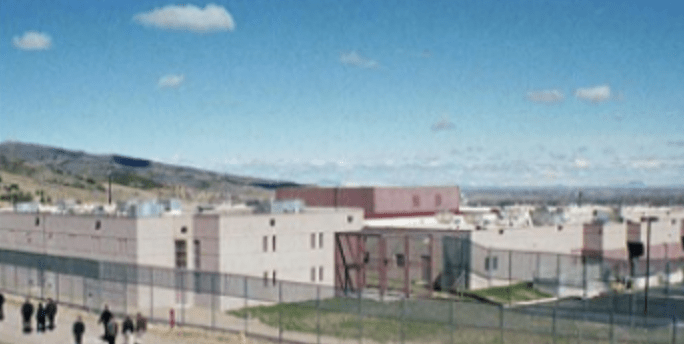
In the western world prisons have become de facto asylums. Data are very difficult to gather, but it’s estimated that over half the prison population in the USA are mentally ill. At Pocatello, female prisoners shared a host of human rights violations with me: one belly-chained at her child’s birth with an officer watching the whole proceedings. Others forced to strip naked and be probed in their vagina or anus on suspicion of hiding items. Women with babies and small children who were not allowed extended or overnight visits. Mentally ill prisoners like my mother who were punished in the ‘hole’ — placed in solitary confinement — for being honest about their symptoms. On and on, repeat ad nauseam.
In our failure to acknowledge everybody’s shadow side we act out our fears on the most vulnerable members of society. We scapegoat the mentally ill and treat them as though everything is their fault. We are unwilling to acknowledge the sickness that imprisons us in our own patterns of projection. Afraid to face the truth, we cannot enact true or lasting change. Transformation is only possible if we set ourselves free from these limitations and acknowledge the injustice that lies at the heart of the justice system.
My own work as an advocate for restorative justice emerged from these experiences. I saw needs go unmet for decades for everyone involved. I saw no chance of healing, or even of the slightest opening towards it in the prison system. I knew that what I’d experienced was the exact opposite of justice. Justice is respect and communication, and true accountability and reparation. It means distinguishing the individual as separate from their crime and the harm it has caused, and truthfully evaluating the unique conditions that inform a person’s actions. Justice is helping all people — including offenders — to be and feel accountable for what they have done, and to work together to make things right.
I can’t be anything but grateful for the opportunity to choose love over fear again and again throughout the last 25 years, and to live out that commitment in my work. I’ve done everything I can to respect and understand how my mother’s actions have affected others in the community, and to listen to the often ugly, revenge-based messages I’ve received from strangers. I know that housing 25 per cent of the world’s prisoners in American jails when only five per cent of the world’s population lives in the USA is both morally wrong and substantively ineffective as the basis for justice and reconciliation. I know that corporations with vested interests are passionate about filling every prison bed. I know that punishment only exacerbates the problem.
I know that stories like my mom’s must be held and heard safely to provide the raw material for healing. I know that people do not heal when they are pitted against each other and made to play a ruthless game of blame and shame. I know that by humanizing those stories we release the possibility of redemption, and come to understand our shared humanity. Without doubt, I know that restorative justice makes real the fact that conflict, pain, suffering and crime are part of all our existence. They constitute our shadow side.
Facing those shadows head on, naming them, and valuing people for who they are and not for the crimes they have committed, opens the way to offer a renewed sense of belonging to those we realize we have discarded. As Carl Jung once wrote, “if [we] only learn to deal with [our] own shadow [we] have done something real for the world. We have succeeded in shouldering at least an infinitesimal part of the gigantic, unsolved social problems of our day.”
This webinar was recorded on May 9th, 2025.
In this episode, social anthropologist and experienced mediator Deborah Heifetz will explore her groundbreaking Map to Compassion — a non-hierarchical framework recently published in MIT’s Journal of Awareness-Based Systems Change. She will guide us in understanding how we can sustain curiosity in environments dominated by fear and distrust. Drawing on over 30 years of global peacebuilding experience and somatic education, Heifetz illuminates how our developmental needs, culture, and tribal affiliations shape our emotional responses. Her emphasis on fairness over punitive justice aligns with Restorative Justice principles, inviting inquiry through the question: “What can be done to feel fairly treated?” This focus on fairness elicits deeper, more feelingful inquiries and reveals choices that support repair with the intent on rebuilding relationships and communities. Over many years, Heifetz has worked at the nexus of inner and outer peace. In this webinar, she will offer compassionate approaches to conflict resolution, providing practical tools for balancing emotionally charged needs during challenging times.
ABOUT DEBORAH:
Deborah Heifetz (she/her) is a social anthropologist, mediator, and professional facilitator with over 30 years of experience in peacebuilding, conflict resolution, and somatic education. She developed the systems-based model – the Human Needs Map, a circular matrix representing the interconnections between human needs at different levels of scale and reflecting the synergies and tensions between needs. Her model has been considered a breakthrough framework by founders of Human Needs Theory for its non-hierarchical approach to human needs and for the way human needs and emotions are tied to human development. A co-founder of BraveHearts International, she has worked globally in mediation, sustainability, and leadership training, integrating movement-based and somatic practices like Laban Movement Analysis and Somatic Experiencing with her knowledge and sensitivity for culture and community building. A Chevening Scholar, she recently published The Map to Compassion in MIT’s Journal for Awareness-Based Systems Change. Heifetz works at the nexus of inner and outer peace.
Website: https://heifetzmatrix.com/
HOSTED BY: Founder & Executive Producer Molly Rowan Leach (she/her), and Social Media and Marketing Manager Logan Ward (he/him).
ABOUT MOLLY: https://restorativejusticeontherise.org/about-us/host-executive-producer/
Molly’s writing: https://medium.com/@mollyleach
ABOUT LOGAN: https://www.loganward.net/about
Logan’s portfolio: https://www.loganward.net/
ABOUT RESTORATIVE JUSTICE ON THE RISE
Podcast: Play in new window | Download | Embed
Subscribe: RSS

Media That Matters:
Public Dialogue On Justice
Restorative Justice on the Rise is an international live dialogue via Webcast and Telecouncil platform that reaches an international constituency of invididuals, organizations, professionals, academics, practitioners, and more. The mission is to provide connection, advocacy, education and inspired action as a public service to individuals and communities seeking to proactively improve relationships and structures within their spheres and our world.